How to Start a Perfume Oil Business in India (2026): Costs, Sourcing & First 90 Days
A step-by-step 2026 guide to starting a perfume oil business in India — where to source quality perfume oils in bulk, startup costs, licences, pricing, and your first 90 days.
In this article
To start a perfume oil business in India in 2026 you need three things: a reliable perfume-oil supplier, roughly ₹20,000–₹50,000 in starting stock and packaging, and a simple way to sell (Instagram plus a basic online store). The question almost every beginner asks first is where to get the oils — and the short answer is to buy small, high-quality bulk quantities from a specialist perfume-oil supplier, not a generic wholesale marketplace where quality and consistency are a gamble.
This guide walks you through the whole path: what to sell, where to source, what it actually costs, the licences you really need, how to price for profit, and a 90-day plan to your first paying customers.
Quick answer (TL;DR)
- Where to source oils: a specialist perfume-oil supplier that offers samples, small minimums, and tiered per-gram-to-per-kg pricing — so you can test before committing.
- Starting budget: ₹20,000–₹40,000 for a lean home start; ₹50,000–₹1,00,000 for a comfortable launch with branding and range.
- What to stock first: 8–15 proven, best-selling scents in small quantities — not 50 average ones.
- Licences: GST registration is the main one for selling; no special manufacturing licence is needed to resell or rebottle finished perfume oils (blending/manufacturing at scale is different — see below).
- Time to first sale: realistically 30–60 days if you start with samples and Instagram.
Where do beginners buy perfume oils in India?
This is the make-or-break decision, so let's spend real time on it. Most new sellers fail here in one of two ways: they either buy cheap, inconsistent oil from a random wholesaler (and lose customers when batch two smells different from batch one), or they over-commit — dropping ₹1,00,000 on 5kg drums of scents they haven't tested and can't sell.
The smart path is to buy from a specialist perfume-oil supplier that is set up for small businesses. Here's what to look for:
- Samples before you commit. You should be able to smell a scent — via a sample vial or a sample kit — before buying it in bulk. A supplier that won't sample is a red flag.
- Small minimums (MOQ). Start at 50g–250g per scent, not kilos. You want range and low risk while you learn what your customers actually buy.
- Batch-to-batch consistency. The same scent must smell the same in six months. This is the single biggest quality difference between a specialist and a marketplace reseller.
- A real range. Attars, inspired / impression oils, aroma chemicals, and carrier/base oils under one roof means you can grow without hunting for new suppliers.
- Transparent tiered pricing. Clear per-gram, per-100g and per-kg rates let you calculate your margins before you buy.
- Proper GST invoices. This lets you claim input tax credit and keeps you compliant from day one.
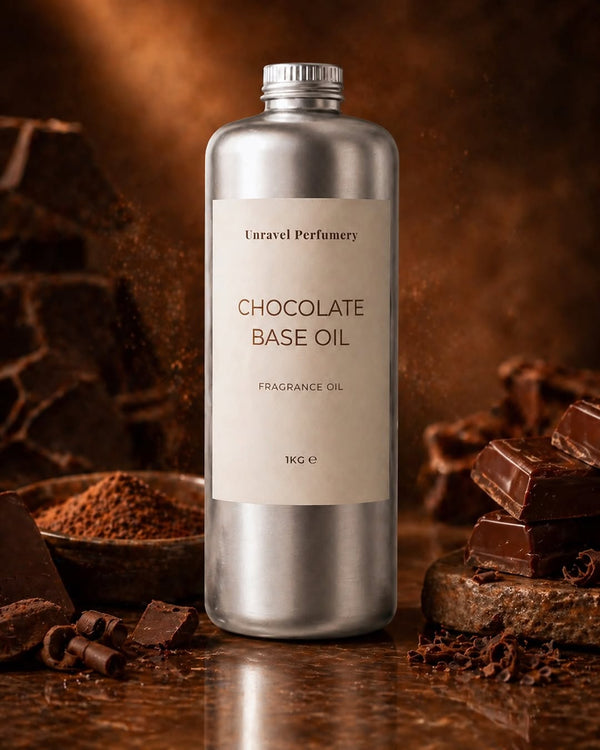
Specialist suppliers such as Unravel Perfumery are built around exactly this: sample kits so you can smell before you scale, tiered pricing from small quantities up to 5kg/10kg, and a consistent, curated catalogue of best-selling and inspired scents. That combination — test small, then scale the winners — is what keeps your early cash safe.
Where NOT to source (common traps)
- Unbranded marketplace "wholesale" listings with no samples and no consistency guarantee.
- Buying finished branded perfumes to decant — this is trademark-risky and low-margin.
- Importing blind from overseas before you've validated demand — customs, MOQs and shipping will bury a beginner.
What types of perfume oils should you stock?
You don't need everything. A tight, well-chosen range outsells a sprawling one. The main categories:
- Inspired / impression oils — oils crafted to evoke popular designer and niche fragrance profiles. These are the easiest first sellers because customers already recognise the scent style.
- Attars & traditional oils — oud, musk, rose, saffron and classic Indian attars. Strong repeat-purchase category with cultural demand.
- Aroma chemicals & accords — for customers who blend their own (DIY perfumers, small brands). Higher-knowledge, higher-loyalty buyers.
- Carrier & base oils — for diluting and rollerball products.
Start with 8–15 proven scents across inspired oils and attars, plus a couple of carriers. Expand only into what sells.
How much does it cost to start a perfume oil business?
You can genuinely start from home for under ₹40,000. Here's a realistic breakdown:
| Item | Lean start | Comfortable start |
|---|---|---|
| Starting oil stock (8–15 scents, small qty) | ₹15,000 | ₹35,000 |
| Bottles, rollerballs, sprayers, caps | ₹5,000 | ₹15,000 |
| Labels & basic branding | ₹3,000 | ₹12,000 |
| Sample vials / sample kits | ₹2,000 | ₹6,000 |
| Online store + basic marketing | ₹0–3,000 | ₹10,000 |
| Approximate total | ₹25,000–₹30,000 | ₹70,000–₹1,00,000 |
The single biggest lever on this number is not over-buying stock. Buy small, sell through, reorder the winners.
Step by step: your first 90 days
- Days 1–10 — Pick your niche & get samples. Decide who you serve (e.g. affordable everyday scents, premium attars, or DIY blenders). Order a sample kit from a specialist supplier and smell everything.
- Days 10–20 — Choose your first 8–15 scents. Pick proven, recognisable profiles. Order small bulk quantities of only these.
- Days 20–35 — Brand & bottle. Simple logo, clean labels, consistent bottles. Decide your sizes (3ml, 6ml, 12ml rollerballs are popular starters).
- Days 35–50 — Set up selling. An Instagram business page plus a basic Shopify or Instagram/WhatsApp shop is enough. Photograph your products in daylight.
- Days 50–70 — Launch with samples. Offer a low-cost sample set — it's the cheapest way to convert first-time buyers into repeat customers.
- Days 70–90 — Double down on winners. Look at what sold, reorder those in slightly larger quantities, and drop what didn't move.
How do you price perfume oils for profit?
Perfume oils typically retail at 2.5×–4× your landed cost for small retail sizes, with samples priced to cover cost and drive trial rather than to profit. Rough guide:
- Samples (1–3ml): priced near cost — the goal is trial, not margin.
- Retail rollerballs (6–12ml): 3×–4× landed cost.
- Bulk / refill sizes: lower multiple (2×–2.5×) but bigger order value.
Always price off your true landed cost — oil + bottle + label + your time — not just the oil.
Do you need a licence to sell perfume oils in India?
For reselling and rebottling finished perfume oils, the main requirement is a GST registration (needed to sell across most online platforms and to invoice properly). You'll also want a basic business name and, ideally, a current account.
If you move into manufacturing or blending at scale, additional rules can apply (factory, labelling and cosmetic-product regulations under BIS/relevant authorities). This guide is general information, not legal advice — confirm your specific situation with a local CA or consultant before scaling into manufacturing.
What bottles, bases and supplies do you need?
Once your scents are chosen, the rest of your shopping list is dilution and packaging. Getting these right protects both your margins and your customer's first impression.
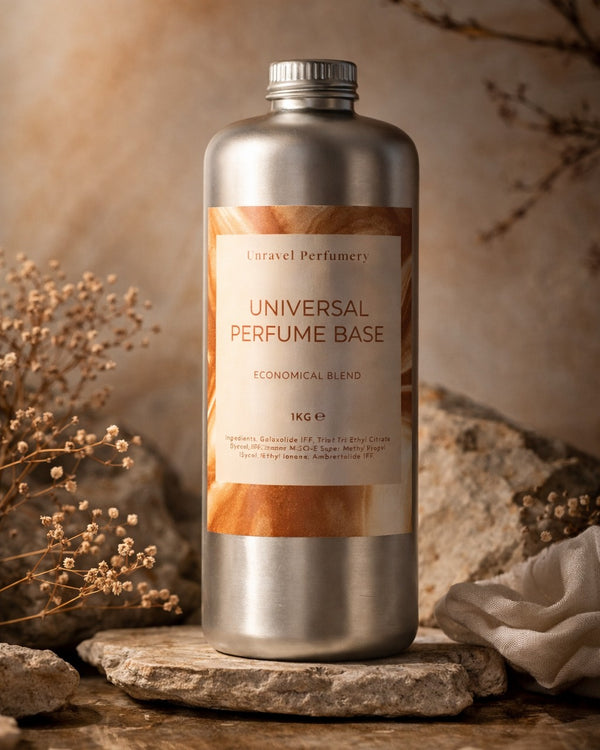
- Base / carrier oils. Odourless carriers such as DPG (dipropylene glycol) and light coconut (MCT) oil dilute concentrated oils down to a wearable, skin-safe strength. Buying base separately — rather than only pre-diluted oil — noticeably lowers your cost per bottle.
- Bottles. Roll-on bottles for everyday sizes, and glass spray bottles for premium 30–50ml products. Buying in bulk keeps your unit cost low.
- Blending & sampling tools. Droppers, beakers, funnels and blotter strips make dilution accurate and clean — and let you fill sample vials for customers.
- Labels & packaging. A crooked label or a leaky cap undoes great juice in seconds. Presentation is half the sale, so budget for it from day one.
How do you test perfume oil quality before selling?
Never list a scent you haven't worn for a full day. Testing is quick, costs almost nothing, and is exactly what protects your reviews and repeat sales:
- Blotter test. Dip a strip, note the opening, and watch how the scent evolves over the first 30–60 minutes.
- Skin test. Wear it for 8–12 hours to judge longevity and projection — the two things customers complain about most.
- Dilution test. Try the same oil at different strengths in your base to find the sweet spot between performance and cost.
Common beginner mistakes to avoid
- Buying too many scents in too-large quantities before validating demand.
- Sourcing from suppliers who won't provide samples or consistency.
- Under-pricing (forgetting bottle, label and your time in the cost).
- Skipping samples — they are your cheapest customer-acquisition tool.
- Decanting branded perfumes (trademark and quality risk).
Frequently asked questions
Where can I buy perfume oils to start a business in India?
Buy from a specialist perfume-oil supplier that offers samples, small minimum orders, and tiered per-gram-to-per-kg pricing, so you can test scents before committing to bulk. Avoid unbranded marketplace listings with no consistency guarantee.
How much does it cost to start a perfume oil business?
A lean home-based start costs around ₹25,000–₹40,000 covering stock, bottles, labels and samples. A comfortable launch with fuller branding and range runs ₹70,000–₹1,00,000.
Do I need a licence to sell perfume oils in India?
To resell or rebottle finished perfume oils you mainly need a GST registration. Manufacturing or blending at scale can trigger additional cosmetic-product and labelling regulations — check with a local consultant.
What is the difference between attar, perfume oil, and aroma chemicals?
Attars are traditional, often natural distilled oils such as oud, rose and musk. Perfume or inspired oils are blended scents crafted to a fragrance profile. Aroma chemicals are individual scent building blocks used by people who blend their own perfumes.
How much profit is there in a perfume oil business?
Small retail sizes typically sell at 2.5×–4× landed cost, so margins are healthy — the key is buying consistent oil at fair bulk pricing and converting first-time buyers with samples.
Can I start a perfume oil business from home?
Yes. Most Indian perfume-oil businesses start from home with a small stock, an Instagram page and a basic online store, then scale as scents sell through.
Ready to source your first scents?
The fastest way to start is to smell before you scale. Order a sample kit, pick your winners, then reorder in bulk at tiered pricing.