Private Label Perfume Oils: How to Launch Your Own Fragrance Brand in India (2026)
A practical 2026 guide for entrepreneurs launching a private-label perfume oil brand in India — private label vs white label, choosing scents, sourcing oil in bulk at low MOQs, bottling, packaging, a rupee cost breakdown, pricing, and GST/compliance basics.

In this article
To launch a private-label perfume oil brand in India in 2026, buy ready-made perfume oils in bulk from a specialist supplier, bottle and label them under your own brand name, register for GST, and start selling — you do not need a factory or a chemistry background. The fastest, lowest-risk route is to start with samples, pick 6–12 scents your customers actually respond to, order those in bulk, and put your own label on them.
This guide explains the difference between private label and white label, walks you through every step from choosing scents to pricing and compliance, and shows you how to test the whole idea for a few thousand rupees before you commit real money.
Quick answer (TL;DR)
- Private label vs white label: white label = a stock product you rebrand as-is; private label = you choose the scents, sizes and packaging, and sell them exclusively as your brand.
- You don't manufacture: most Indian perfume brands start by rebottling finished perfume oils from a supplier — no blending equipment required.
- MOQ reality: a good oil supplier lets you start from roughly 100g–250g per scent, not kilos — so you can launch a range affordably.
- Startup budget: roughly ₹40,000–₹80,000 for a proper branded launch; a lean test can be done for under ₹25,000.
- Licences: GST is the main one for selling and rebottling; blending or manufacturing at scale can trigger extra cosmetic-product rules — take local advice before scaling.
- Start small: a sample kit is your cheapest research tool. Smell before you scale.
What is the difference between private label and white label perfume oil?
The two terms get used interchangeably, but they mean different things — and the difference decides how much control you have over your brand.
White label means a supplier already makes a finished product and offers the same product to many resellers. You put your name on it and sell it as-is. It's fast and cheap, but the exact same scent and bottle may appear under a dozen other brands.
Private label means the product is made or packaged to your specification — your choice of scents, concentration, bottle, cap, size and label — and sold exclusively under your brand. In the perfume-oil world, most beginners run a practical hybrid: they select from a supplier's proven scent library (like white label), but bottle, size and brand it themselves (like private label). That gives you a real brand without the cost and MOQ of bespoke manufacturing.
| Factor | White label | Private label |
|---|---|---|
| Scent selection | Fixed, supplier's stock | You choose from the range |
| Bottle & packaging | Often supplier-standard | Your bottles, sizes and labels |
| Exclusivity | Shared with other resellers | Sold only as your brand |
| Minimum order | Lowest | Low–medium (per scent) |
| Setup effort | Minimal | Moderate (branding, bottling) |
| Brand control | Low | High |
| Best for | Testing an idea fast | Building a lasting brand |
For a serious brand you want to end up on the private-label side. The good news is you can start on the white-label end — buy small, rebottle, learn — and move toward full private label as you grow.
Why start a perfume brand with oils instead of spray perfume?
Alcohol-based spray perfume (eau de parfum) is what most people picture, but it's a hard first product: it needs alcohol handling, higher MOQs, custom filling, and heavier compliance. Perfume oils — attars and concentrated fragrance oils sold in rollerballs or dab-on bottles — are the ideal starter product because you buy the oil finished and simply rebottle it (no filling line or alcohol licence to begin), minimums are small so you can launch 6–12 scents cheaply, oils have strong cultural demand in India, and margins are healthy while samples stay cheap to produce.
Once your oil brand has traction and cash flow, moving into sprays becomes a funded, informed decision rather than a risky first bet.
How do you choose the scents for your fragrance line?
Your scent selection is your brand. Don't try to carry everything — a tight, well-chosen edit outsells a sprawling one. Work by fragrance family and profile rather than by copying any named brand:
- Fresh & citrus — bright, everyday, wide appeal; good entry scents.
- Woody & amber — warm, long-lasting, strong repeat purchase.
- Oud, musk & attar — culturally rooted, premium positioning, loyal buyers.
- Floral & rose — gifting and everyday wear.
- Sweet & gourmand — younger buyers, social-media friendly.
Pick 6–12 scents that give you at least one strong option in each family you want to serve. Describe them by their notes and character (for example, "warm amber with vanilla and smoky woods") rather than by referencing designer or luxury brand names — naming another brand's product to sell yours is a trademark risk and weakens your own identity.
The only reliable way to choose is to smell. Order a sample kit or discovery set, live with each scent for a day, and note which ones get compliments. Those are your launch line.
Where do you source perfume oil in bulk for a private label?
This is the make-or-break decision. You want a specialist perfume-oil supplier set up for small brands, not a generic marketplace listing. Look for:
- Samples before you commit — smell every scent via a sample vial or kit before ordering bulk.
- Small, per-scent MOQs — starting around 100g–250g so you can carry a range without over-buying.
- Batch-to-batch consistency — the same scent must smell identical six months later, or you lose repeat customers.
- Tiered pricing — clear per-100g, per-kg and up to 5kg/10kg rates so you can plan margins as you scale.
- A full range under one roof — inspired oils, attars, aroma chemicals and carrier/base oils, so you can grow without hunting for new suppliers.
- Proper GST invoices — so you can claim input tax credit and stay compliant.
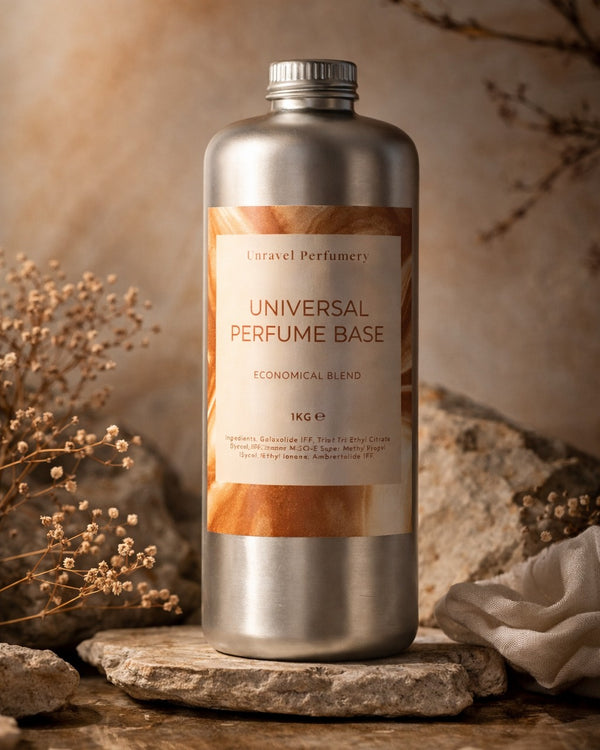
Specialist suppliers such as Unravel Perfumery are built for exactly this private-label starting point: sample kits so you can smell before you scale, a curated catalogue of best-selling and inspired scent profiles, and tiered pricing from small quantities right up to 5kg/10kg. The winning pattern is simple — test small, then buy the winners in bulk.
What about bottling, packaging and labels?
Packaging is where a rebottled oil becomes your brand. Keep it clean and consistent:
- Bottles: 3ml, 6ml and 12ml rollerballs or dab-on bottles are popular starter sizes. Pick one or two sizes and stay consistent.
- Filling: for small batches you can fill by hand with a pipette or mini funnel; add a filling machine only when volume justifies it.
- Labels: your logo, scent name, size, and basic ingredient/usage line. Print on waterproof/oil-resistant label stock — paper labels smudge.
- Outer packaging: a simple box or pouch lifts perceived value and helps gifting.
- Consistency beats decoration: the same bottle, same label layout and same font across your range looks more professional than a mix of fancy one-offs.
How much does it cost to launch a private-label perfume brand in India?
You can run a lean test for under ₹25,000 and a proper branded launch for ₹40,000–₹80,000. A realistic breakdown:
| Item | Lean test | Branded launch |
|---|---|---|
| Perfume oil in bulk (6–12 scents, small qty) | ₹12,000 | ₹30,000 |
| Bottles, rollerballs, caps | ₹4,000 | ₹15,000 |
| Custom labels & branding/logo | ₹3,000 | ₹15,000 |
| Sample vials / sample kits | ₹2,000 | ₹6,000 |
| Outer boxes/pouches | ₹0 | ₹8,000 |
| Online store + first marketing | ₹0–3,000 | ₹6,000 |
| Approximate total | ₹20,000–₹25,000 | ₹50,000–₹80,000 |
The biggest lever on this number is not over-buying oil. Buy small, sell through, and reinvest into the scents that move.
Step by step: launching your private-label perfume oil brand
- Define your brand and buyer. Decide who you serve (affordable everyday scents, premium attars, or gifting) and pick a brand name you can trademark later. Check the name isn't already taken.
- Order samples and choose your scents. Get a sample kit from a specialist supplier, smell everything, and lock in 6–12 scents across the families you want to carry.
- Order oil in bulk for your chosen scents only. Start with small per-scent quantities (about 100g–250g each) at tiered pricing. Keep GST invoices.
- Source bottles and design labels. Choose one or two sizes, order oil-resistant labels with your logo, scent name and size, and a simple outer box if gifting matters.
- Fill, label and quality-check. Bottle in small batches, wipe and seal, and confirm every unit is filled to the same level and correctly labelled.
- Register for GST and set up selling. Complete GST registration, then set up an Instagram business page plus a basic Shopify or WhatsApp shop. Photograph products in daylight.
- Launch with samples and a small range. Offer a low-cost sample set to convert first-time buyers, and gather feedback on which scents win.
- Reorder the winners in bulk. Scale up the scents that sell, drop the ones that don't, and move toward larger 1kg–5kg buys as demand proves out.
How should you price your private-label perfume oils?
Perfume oils typically retail at 2.5×–4× your true landed cost for small retail sizes. Always calculate landed cost as oil + bottle + label + packaging + your time — not just the oil. A rough guide:
- Samples (1–3ml): priced near cost — the goal is trial, not margin.
- Retail rollerballs (6–12ml): 3×–4× landed cost.
- Bulk / refill sizes: a lower multiple (2×–2.5×) but a bigger order value.
As your bulk buying moves up the tiers (toward 1kg, 5kg and 10kg), your per-unit oil cost drops — so your margin improves without raising your retail price. That is the core economics of a private-label brand.
What licences and compliance do you need?
For reselling and rebottling finished perfume oils under your own label, the main requirement is a GST registration — needed to sell on most platforms and to invoice properly. You'll also want a registered business name and a current account, and you should keep supplier invoices for traceability.
If you move into blending or manufacturing at scale — mixing your own formulations, producing large volumes, or making cosmetic-classified products — additional rules can apply, including labelling and cosmetic-product regulations under the relevant Indian authorities (BIS and related bodies). Requirements depend on exactly what you make and how you label it. This guide is general information, not legal advice — confirm your specific situation with a local CA or compliance consultant before scaling into manufacturing.
How do you start small and test before committing?
The smartest launch is a cheap experiment. Before spending on custom boxes or large oil orders, buy a sample kit and shortlist your scents, order small bulk quantities of just 4–6 scents to begin, and sell a simple sample set first — it's your cheapest customer-acquisition tool and your best market research. Let real sales tell you which scents deserve a bigger bulk order and full packaging. This "test small, scale winners" loop keeps your early cash safe.
Frequently asked questions
What is the difference between private label and white label perfume?
White label means selling a supplier's ready-made product rebranded as-is, often shared with other resellers. Private label means the product — scents, sizes, bottles and labels — is made to your specification and sold exclusively under your brand. Most Indian perfume-oil startups run a hybrid: they pick scents from a supplier's range but bottle and brand them themselves.
Do I need a licence to start a private-label perfume brand in India?
To resell and rebottle finished perfume oils under your own label, you mainly need a GST registration. Blending or manufacturing at scale can trigger additional cosmetic-product and labelling regulations, so take advice from a local consultant before you scale into production.
What is the minimum order quantity for private-label perfume oil?
With a specialist perfume-oil supplier you can typically start from around 100g–250g per scent, which is enough to bottle a small retail range. That is far lower than the 1,000–5,000-unit minimums common for custom alcohol-based spray perfume manufacturing.
How much does it cost to create my own perfume line?
A lean test launch of a private-label oil brand can be done for under ₹25,000. A fuller branded launch with custom labels, packaging and a range of 6–12 scents typically runs ₹50,000–₹80,000. The main cost lever is not over-buying oil before you know what sells.
Can I start a perfume brand from home?
Yes. Most Indian private-label perfume-oil brands start from home: buy oil in bulk, hand-fill rollerball bottles, apply your labels, and sell through Instagram and a basic online store. You scale into larger equipment and volumes only once demand is proven.
Can I name my scents after famous designer perfumes?
No — naming another brand's product to describe or sell yours is a trademark risk. Describe your scents by their notes, family and character instead (for example "warm amber, vanilla and smoky woods"). This keeps you safe legally and builds a stronger identity of your own.
Ready to build your own fragrance brand?
Start the right way: smell before you scale. Order a sample kit, choose your launch scents, then reorder the winners in bulk at tiered pricing — from small quantities up to 5kg/10kg.